Amulet
พระผงสุริยันจันทรา ปี2530 พิมพ์ใหญ่
องค์พ่อจตุคามรามเทพ รุ่นแรก ปี 2530
พิมพ์ใหญ่ เนื้อขาวปัดนาค–ปัดทอง : ปฐมบทแห่งพระผงสุริยันจันทรา
ในบรรดาวัตถุมงคลที่เกี่ยวข้องกับองค์พ่อจตุคามรามเทพ มีชื่อหนึ่งที่นักสะสมและผู้ศรัทธามักกล่าวถึงเสมอ คือ “จตุคามรามเทพ รุ่นแรก ปี พ.ศ. 2530” โดยเฉพาะพระผงสุริยันจันทรา พิมพ์ใหญ่ หรือแว่นกลมใหญ่ เนื้อขาว ซึ่งพบทั้งองค์ที่มีการปัดผิวด้วยทอง นาก หรือวัสดุตกแต่งในลักษณะต่าง ๆ หลักฐานจากรายการประกวดพระเครื่องหลายแห่งยังคงแยกประเภท พระผงสุริยันจันทรา พิมพ์ใหญ่ เนื้อขาว ปี 2530 ออกจากพิมพ์เล็กและเนื้อชนิดอื่นอย่างชัดเจน สะท้อนให้เห็นว่าพิมพ์นี้ได้รับการยอมรับในวงการสะสมในฐานะหนึ่งในรูปแบบหลักของวัตถุมงคลรุ่นแรก
กำเนิดในวาระสำคัญของเมืองนครศรีธรรมราช
วัตถุมงคลชุดนี้เกี่ยวข้องกับช่วงเวลาการจัดสร้างหลักเมืองนครศรีธรรมราช และมีข้อมูลเผยแพร่ว่าได้สร้างขึ้นเพื่อประกอบพิธีกรรมในช่วงวันที่ 3–5 มีนาคม พ.ศ. 2530 ซึ่งเป็นช่วงเดียวกับพิธีสำคัญที่เกี่ยวเนื่องกับหลักเมืองนครศรีธรรมราช ด้วยเหตุนี้ พระผงสุริยันจันทราปี 2530 จึงไม่ได้ถูกมองเพียงในฐานะ “พระเครื่องรุ่นหนึ่ง” แต่มีความผูกพันกับบริบททางประวัติศาสตร์ ความเชื่อ และพิธีกรรมของเมืองนครศรีธรรมราชอย่างแนบแน่น คำว่า “รุ่นแรก” จึงมีความหมายมากกว่าลำดับการผลิต หากยังหมายถึงจุดเริ่มต้นของรูปแบบสัญลักษณ์ที่ต่อมากลายเป็นภาพจำขององค์จตุคามรามเทพในวงกว้าง
ศิลปะแห่งจักรวาลบนองค์พระ
ลักษณะที่โดดเด่นของพระผงสุริยันจันทราคือรูปทรงกลม คล้ายการจำลองจักรวาลหรือจักรราศีไว้บนพื้นที่เล็ก ๆ บนด้านหน้าปรากฏองค์เทวรูปประทับอยู่บริเวณศูนย์กลาง รายล้อมด้วยองค์ประกอบเชิงสัญลักษณ์จำนวนมาก ทั้งวงเม็ดประคำ รูปสัตว์หรือเทพผู้พิทักษ์ และลวดลายที่เชื่อมโยงกับแนวคิดเรื่อง 12 นักษัตร และจักรวาลวิทยาตามคติของผู้จัดสร้าง แหล่งข้อมูลเกี่ยวกับรุ่นนี้ระบุว่าเทวรูปกลางองค์พระถูกตีความในยุคนั้นว่าเชื่อมโยงกับพระโพธิสัตว์อวโลกิเตศวร และใช้แทนองค์จตุคามรามเทพในเชิงสัญลักษณ์ ด้านหลังปรากฏอักขระและยันต์ต่าง ๆ ซึ่งแหล่งข้อมูลของรุ่นนี้อธิบายว่าเกี่ยวข้องกับยันต์หัวใจธรณี หัวใจมนุษย์ และคาถากำกับธาตุตามคติของผู้สร้าง เมื่อพิจารณาทั้งสองด้านร่วมกัน พระผงสุริยันจันทราจึงมีลักษณะเสมือน แผนผังจักรวาลเชิงสัญลักษณ์ มากกว่าจะเป็นเพียงภาพเทพองค์หนึ่งที่ถูกประดิษฐานอยู่บนเหรียญ
“พิมพ์ใหญ่” หรือ “แว่นกลมใหญ่”
ในวงการสะสมจะพบคำเรียกทั้ง พิมพ์ใหญ่, พิมพ์กลมใหญ่ และ แว่นกลมใหญ่ ซึ่งใช้กล่าวถึงพระผงสุริยันจันทราขนาดใหญ่ของปี 2530 เอกสารรายการประกวดของสมาคมพระเครื่องระบุชื่อประเภทไว้ชัดเจนว่า “พระผงสุริยันจันทรา แว่นกลมใหญ่ เนื้อขาว ปี 2530” และยังแยกรายการ “ไม่จำกัดปัด” ออกต่างหาก แสดงให้เห็นว่ารูปแบบการปัดผิวเป็นอีกองค์ประกอบหนึ่งที่นักสะสมใช้พิจารณาในการจำแนกพระชุดนี้ ขนาดที่ใหญ่กว่าทำให้รายละเอียดของศิลปะบนองค์พระสามารถปรากฏได้อย่างเต็มที่ ตั้งแต่องค์ประธานตรงกลางจนถึงลวดลายรอบนอก จึงเป็นพิมพ์ที่เหมาะอย่างยิ่งสำหรับศึกษาศิลปกรรมต้นแบบของจตุคามรามเทพยุคแรก
เนื้อขาว และเสน่ห์ของการปัดนาค–ปัดทอง
สิ่งที่ทำให้องค์ เนื้อขาว แตกต่างจากเนื้อชนิดอื่นคือพื้นผิวสีอ่อน ซึ่งทำให้ลวดลายและร่องลึกขององค์พระเกิดมิติเด่นชัด เมื่อมีการปัดผิวด้วยโลหะสีทองหรือสีออกทองแดงอมชมพูในกลุ่มที่นักสะสมเรียกกันว่า ปัดทอง หรือ ปัดนาค รายละเอียดบนส่วนที่นูนจะยิ่งโดดเด่นขึ้นเหนือพื้นเนื้อสีขาว แหล่งข้อมูลทั้งในวงการสะสมและสื่อเกี่ยวกับพระเครื่องได้บันทึกการมีอยู่ของ พิมพ์ใหญ่ เนื้อขาวปัดทอง ไว้อย่างชัดเจน ขณะที่ฐานข้อมูลซื้อขายพระเครื่องก็พบการเรียก พิมพ์ใหญ่ เนื้อขาวปัดนาค ปี 2530 เช่นกัน อย่างไรก็ตาม คำเรียก “ปัดนาค” กับ “ปัดทอง” อาจมีการใช้แตกต่างกันไปตามวงการ ผู้สะสม หรือสภาพผิวขององค์พระ จึงไม่ควรใช้สีที่มองเห็นด้วยตาเพียงอย่างเดียวเป็นข้อสรุปว่าองค์หนึ่งเป็นชนิดใดโดยเด็ดขาด นี่เป็นประเด็นสำคัญสำหรับการศึกษาพระรุ่นนี้ เพราะเมื่อผ่านเวลามาเกือบสี่ทศวรรษ ผิวโลหะอาจหม่น เปลี่ยนสี สูญเสียบางส่วน หรือเกิดปฏิกิริยากับสภาพแวดล้อมจนทำให้การแยก “นาค” และ “ทอง” ด้วยภาพถ่ายเพียงอย่างเดียวทำได้ยาก
มวลสารและแนวคิดแห่งการสร้าง
ข้อมูลที่เผยแพร่เกี่ยวกับรุ่นปี 2530 ระบุถึงการใช้มวลสารจำนวนมาก เช่น วัสดุจากหลักเมือง ไม้มงคล ดินจากสถานที่ต่าง ๆ เกสรดอกไม้ ว่านมงคล และวัสดุอื่นตามคติพิธีกรรม ในมุมของผู้ศรัทธา มวลสารเหล่านี้มีความหมายเชิงมงคลและเป็นส่วนหนึ่งของพิธีกรรม แต่ในมุมของนักศึกษาประวัติศาสตร์วัตถุมงคล สิ่งที่น่าสนใจไม่แพ้กันคือ มวลสารเหล่านี้ทำให้พระแต่ละองค์มีลักษณะผิวแตกต่างกันตามธรรมชาติ ไม่ว่าจะเป็นสี ความแน่น รูพรุน รอยแตกราน หรือคราบที่เกิดขึ้นตามอายุ นั่นทำให้พระจตุคามรุ่นแรกแต่ละองค์มี “บุคลิก” ของตัวเอง และเป็นเหตุผลว่าทำไมการดูพระรุ่นเก่าจึงต้องพิจารณาหลายองค์ประกอบร่วมกัน ไม่ใช่ตัดสินจากสีหรือความเก่าเพียงอย่างเดียว
ร่องรอยของกาลเวลา คือส่วนหนึ่งของประวัติศาสตร์
พระที่สร้างขึ้นในปี 2530 จนถึงปัจจุบันได้เดินทางผ่านกาลเวลามาเกือบ 40 ปีแล้ว
องค์ที่ผ่านการบูชาอาจมีผิวเปิด มีคราบสัมผัส หรือร่องรอยการสึก ขณะที่องค์ซึ่งถูกเก็บรักษาอย่างดีอาจยังมีผิวปัดเหลืออยู่มากกว่า
ดังนั้น รอยแตกราน สีที่ไม่สม่ำเสมอ หรือร่องรอยของผิวโลหะที่หลุดหาย ไม่ได้หมายความว่าองค์พระด้อยค่าเสมอไป ในทางกลับกัน บางครั้งร่องรอยเหล่านี้คือหลักฐานของอายุ การใช้งาน และประวัติการเดินทางของวัตถุชิ้นนั้น
สำหรับนักสะสม สิ่งที่ควรให้ความสำคัญมากกว่าความ “สวยใหม่” คือ ความสอดคล้องของเนื้อ พิมพ์ ผิว ธรรมชาติของอายุ และแหล่งที่มา
จากวัตถุมงคล สู่มรดกทางความเชื่อ
ความสำคัญของจตุคามรามเทพรุ่นแรก ปี 2530 ไม่ได้เกิดขึ้นเพียงเพราะเป็นพระที่นักสะสมต้องการ สิ่งที่ทำให้รุ่นนี้มีความหมายคือการเป็นหนึ่งในวัตถุที่บันทึกช่วงเริ่มต้นของปรากฏการณ์ทางศรัทธาซึ่งต่อมาขยายตัวไปทั่วประเทศไทย ในองค์พระขนาดไม่กี่เซนติเมตร เรามองเห็นทั้งศิลปะ ความเชื่อ พิธีกรรม ประวัติศาสตร์ท้องถิ่น และร่องรอยของผู้คนที่เคยครอบครองวัตถุชิ้นนั้น สำหรับผู้ศรัทธา องค์พ่อจตุคามรามเทพอาจเป็นที่ยึดเหนี่ยวทางจิตใจ สำหรับนักสะสม พระรุ่นแรกคือวัตถุแห่งการศึกษา และสำหรับผู้สนใจประวัติศาสตร์ พระผงสุริยันจันทราปี 2530 คือหนึ่งในหลักฐานที่ช่วยให้เราเข้าใจว่า ความเชื่อหนึ่งสามารถเดินทางจากเมืองนครศรีธรรมราช กลายเป็นปรากฏการณ์ทางวัฒนธรรมระดับประเทศได้อย่างไร
พิมพ์ใหญ่ เนื้อขาวปัดนาค–ปัดทอง จึงมิได้มีคุณค่าเพียงเพราะเป็น “ของเก่า”
แต่มีคุณค่าเพราะมันคือหนึ่งใน ร่องรอยของปฐมบทแห่งศรัทธาจตุคามรามเทพ ร่องรอยซึ่งยังคงถูกศึกษา สะสม เล่าขาน และส่งต่อจากคนรุ่นหนึ่งไปสู่อีกรุ่นหนึ่งจนถึงวันนี้
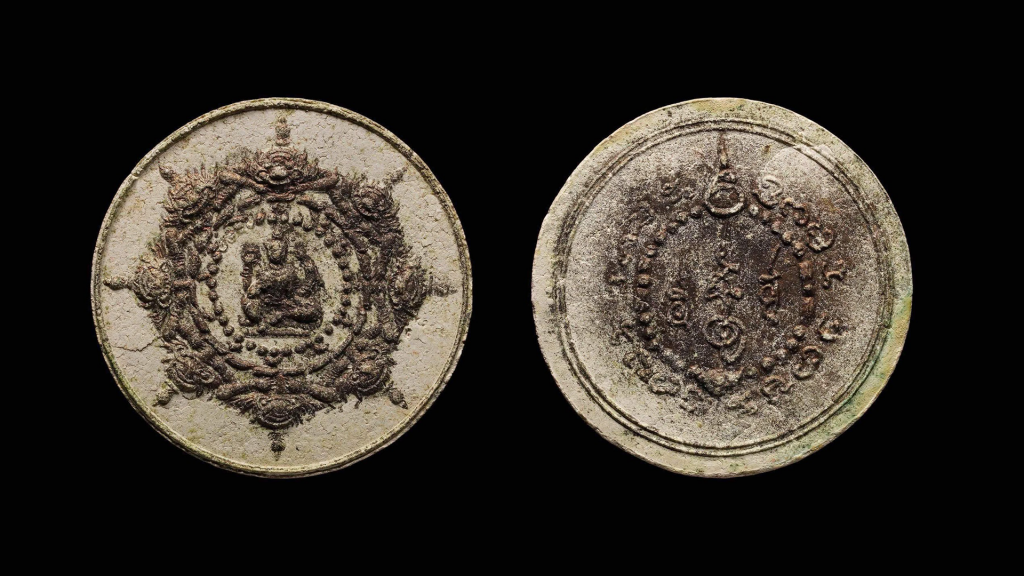
Chatukarm Ramathep, First Edition, B.E. 2530 (1987)
Large Mold, White Sacred Powder with Nak and Gold Highlights — The Beginning of the Suriyan–Chantra Legacy
Among the sacred objects associated with Chatukarm Ramathep, few hold as significant a place in the history of the tradition as the First Edition of B.E. 2530 (1987). One of its most distinctive forms is the Suriyan–Chantra sacred powder amulet, Large Mold, often referred to among Thai collectors as Phim Yai or Waen Klom Yai. The white-bodied examples, particularly those decorated with nak-colored and gold highlights, have become closely associated with the earliest chapter of the Chatukarm Ramathep tradition. More than a collectible object, this amulet represents a convergence of faith, sacred art, ritual symbolism, local history, and the spiritual identity of Nakhon Si Thammarat.
Born from an Important Moment in Nakhon Si Thammarat
The B.E. 2530 sacred objects are closely connected with the establishment and consecration of the Nakhon Si Thammarat City Pillar Shrine. The period surrounding the construction of the City Pillar was an important chapter in the revival and development of beliefs associated with Chatukarm Ramathep. Sacred objects were created in connection with the ceremonies, and the Suriyan–Chantra amulets of 1987 became some of the most recognizable artifacts from that formative era. For this reason, the term “First Edition” means more than simply the first item in a production sequence. It represents the beginning of a visual and spiritual language that would eventually become recognized throughout Thailand as the iconography of Chatukarm Ramathep.
Long before the extraordinary nationwide popularity of Chatukarm Ramathep amulets in later decades, these early pieces already contained the principal symbols, sacred geometry, imagery, and concepts that would define the tradition.
A Sacred Cosmos Within a Circular Form
One of the most remarkable characteristics of the Suriyan–Chantra amulet is its circular composition. Rather than presenting only a single deity or sacred figure, the design creates what can be interpreted as a symbolic sacred universe. At the center sits the principal divine figure, surrounded by concentric rings, sacred beads, guardian figures, celestial motifs, and other symbolic elements. The overall structure suggests concepts associated with cosmic order, celestial cycles, protection, and the relationship between the human world and the sacred realm.
The name Suriyan–Chantra itself evokes the imagery of the Sun and the Moon, two fundamental celestial forces symbolizing balance, cycles, time, illumination, and cosmic harmony. Around the central image are additional symbolic elements traditionally associated with celestial and astrological concepts, including references connected with the twelve zodiac animals. The composition therefore becomes much more than decoration. It is almost a cosmological diagram rendered in sacred art.
The Central Sacred Figure
At the heart of the amulet appears the seated sacred figure that came to represent Chatukarm Ramathep. Historical explanations surrounding the early design have also associated its iconography with Avalokitesvara Bodhisattva, reflecting the artistic and religious influence of the ancient maritime cultures connected with Southern Thailand and the wider Srivijayan world. Over time, however, the image became inseparably connected with the identity of Chatukarm Ramathep. This transformation is important. It demonstrates how sacred imagery can evolve through ritual, tradition, oral history, and collective belief. What began as a symbolic sacred composition gradually became one of the most recognizable representations of Chatukarm Ramathep.
The Reverse: Sacred Scripts and Yantra Symbols
The reverse side of the B.E. 2530 amulet is equally significant. Rather than featuring a conventional portrait or decorative pattern, it contains sacred inscriptions, symbolic characters, and yantra-related elements arranged within the circular composition. Within traditional belief, these inscriptions are associated with protective formulas, elemental concepts, sacred invocations, and ritual knowledge. Together with the imagery on the front, the reverse completes the concept of the amulet as a sacred object whose design integrates: deity, cosmos, sacred script, ritual, and protective symbolism. Seen from this perspective, the Suriyan–Chantra amulet is not merely a religious medallion. It is a carefully constructed symbolic system.
The Large Mold — Phim Yai / Waen Klom Yai
Among collectors, the larger format is commonly described as Phim Yai, meaning “Large Mold,” or Waen Klom Yai, referring to its large circular form. The larger surface allows the complex details of the original artwork to be seen more clearly. The central figure, surrounding guardians, beaded circles, ornamental elements, and outer symbolic structures have more physical space in which to appear. For students of early Chatukarm Ramathep iconography, this makes the Large Mold particularly interesting. It allows us to examine the artistic vocabulary of the earliest generation in greater detail. The piece can therefore be appreciated not only as an amulet but also as a small-scale work of sacred sculpture.
White Sacred Powder
The white-bodied version is among the most visually recognizable varieties of the first edition. Its relatively light-colored material creates a strong contrast with the deeper relief of the design. As the material ages, it may develop natural changes in tone, surface texture, fine cracking, staining, or areas of exposed material. These characteristics can vary considerably from one piece to another depending on storage conditions, handling, humidity, environmental exposure, and previous use. As a result, two authentic examples from the same period may look surprisingly different today. This is one reason why the evaluation of early Chatukarm Ramathep pieces should never depend on color alone.
Nak and Gold Highlights
Some white examples were decorated by applying metallic-colored material to raised areas of the design. Collectors commonly refer to these treatments using terms such as “Pad Nak” and “Pad Thong.” Pad Nak generally describes a warm metallic tone resembling Thai nak, traditionally associated with a reddish or rose-gold appearance. Pad Thong refers to gold-colored highlighting. Against the pale surface of the sacred powder body, these metallic accents create a dramatic visual effect. Raised details become more visible, while recessed areas remain relatively subdued. The result emphasizes the dimensional qualities of the sculpture and gives the amulet a ceremonial appearance. However, terminology surrounding surviving examples must be used carefully. After almost four decades, metallic surfaces may darken, fade, oxidize, wear away, or change color. An area that originally appeared bright gold may today look brown or bronze. A reddish metallic treatment may become difficult to distinguish from aged gold-colored material. Therefore, determining whether a particular example should precisely be described as Pad Nak, Pad Thong, or another surface treatment should not rely solely on photographs or apparent color.
Sacred Materials and the Philosophy of Creation
Traditional accounts of the first B.E. 2530 production describe the use of numerous sacred and auspicious materials. These accounts refer to substances connected with ritual locations, sacred woods, herbs, flowers, earth, ceremonial materials, and other components selected according to traditional beliefs. For devotees, these substances contribute to the spiritual significance of the object. For historians and collectors, they provide another important perspective. Composite sacred-powder materials naturally produce variations in density, texture, coloration, cracking, porosity, and aging. This means that the physical surface of each surviving piece may develop differently. The material itself becomes part of the historical record.
The Beauty of Time
An original amulet created in B.E. 2530 has now existed for almost four decades. During that time, some examples have been worn around the neck, carried by devotees, placed on altars, stored in boxes, mounted in protective cases, or passed from one owner to another. Time inevitably leaves traces. The surface may become worn. Metallic highlights may disappear from the highest points. Fine cracks may develop. The white material may become cream, beige, gray, or brown in certain areas. To someone unfamiliar with old sacred objects, these changes may appear to be imperfections. But from another perspective, they are part of the object’s biography. They are evidence that the amulet has existed through generations of human ownership and devotion. A genuine historical artifact does not always need to appear new. Sometimes, age itself becomes part of its beauty.
Authenticity Requires More Than Appearance
The enormous popularity of Chatukarm Ramathep eventually resulted in countless later editions, reproductions, imitations, and newly manufactured pieces. For that reason, identifying an authentic B.E. 2530 example requires careful study. Serious collectors normally consider several factors together:
- mold characteristics and sculptural details;
- composition and behavior of the material;
- natural surface aging;
- metallic treatment and wear;
- dimensions and proportions;
- known production characteristics;
- provenance and ownership history;
- comparison with recognized reference examples.
No single feature should determine authenticity. A piece should not be declared genuine simply because it looks old, just as an unusual surface should not automatically cause it to be rejected. The strongest judgment comes from examining the entire object as a coherent whole.
From Sacred Object to Cultural Heritage
The historical importance of the First Edition of B.E. 2530 extends far beyond the collecting community. The amulet belongs to a broader cultural story. It connects the religious traditions of Southern Thailand with local history, sacred geography, ritual practice, artistic heritage, and the modern development of the Chatukarm Ramathep tradition. Years later, Chatukarm Ramathep would become a nationwide phenomenon. Millions of people would encounter the name. Thousands of different editions would be created. The image would appear on amulets, statues, temples, publications, and other forms of sacred art. Yet the B.E. 2530 generation takes us back to a time before that phenomenon existed. It allows us to see the tradition near its modern point of origin.
A Legacy Preserved in Sacred Form
For the devotee, Chatukarm Ramathep may represent faith, protection, courage, prosperity, and spiritual reassurance. For the collector, the First Edition represents one of the foundational objects of the tradition. For the historian, it provides evidence of how sacred imagery and local belief can develop into a major cultural movement. And for future generations, the B.E. 2530 Large Mold, White Sacred Powder with Nak and Gold Highlights deserves to be preserved not merely as an old amulet, but as part of the historical heritage surrounding Chatukarm Ramathep. Within its circular form lies far more than an image.
There is art.
There is ritual.
There is history.
There is belief.
And above all, there is a story of faith that began in Nakhon Si Thammarat and continues to be remembered nearly four decades later.
Chatukarm Ramathep, First Edition B.E. 2530 — not simply an object from the past, but a surviving witness to the beginning of a legacy.
Editorial Note: References to sacred powers, blessings, protection, or spiritual effects belong to religious and cultural traditions and should be understood as matters of faith rather than scientifically established effects. Authentication of B.E. 2530 pieces should be based on careful examination of mold, material, surface characteristics, natural aging, provenance, and comparison with recognized examples.