ปิดตาพังพระกาฬ
พลังแห่งการขจัดอุปสรรคในคติจตุคามรามเทพ
ท่ามกลางคติความเชื่อที่เกี่ยวเนื่องกับ จตุคามรามเทพ มีนามหนึ่งที่ได้รับการกล่าวถึงอย่างกว้างขวางในวงการวัตถุมงคลและศรัทธาของผู้คน นั่นคือ “พังพระกาฬ” หรือที่รู้จักกันในรูปแบบของ “พระปิดตาพังพระกาฬ” ในสายความเชื่อเกี่ยวกับจตุคามรามเทพ พังพระกาฬได้รับการอธิบายแตกต่างกันไปตามสำนักและตำนาน บางคติถือว่าเป็น ภาคหนึ่งหรือปางหนึ่งของพระเทวราชโพธิสัตว์จตุคามรามเทพ ขณะที่บางสายเปรียบเสมือน ทหารเอกหรืออำนาจคู่บารมี ผู้ทำหน้าที่พิทักษ์ ปราบสิ่งอัปมงคล และขจัดอุปสรรคที่ขวางทางผู้ศรัทธา ด้วยเหตุนี้ “พังพระกาฬ” จึงไม่ได้เป็นเพียงนามของวัตถุมงคล หากแต่เป็นสัญลักษณ์ของ พลังแห่งการปกป้อง การต่อสู้กับความมืด และการเปลี่ยนผ่านจากภาวะแห่งอุปสรรคไปสู่หนทางใหม่
รูปลักษณ์แห่ง “พระปิดตา”
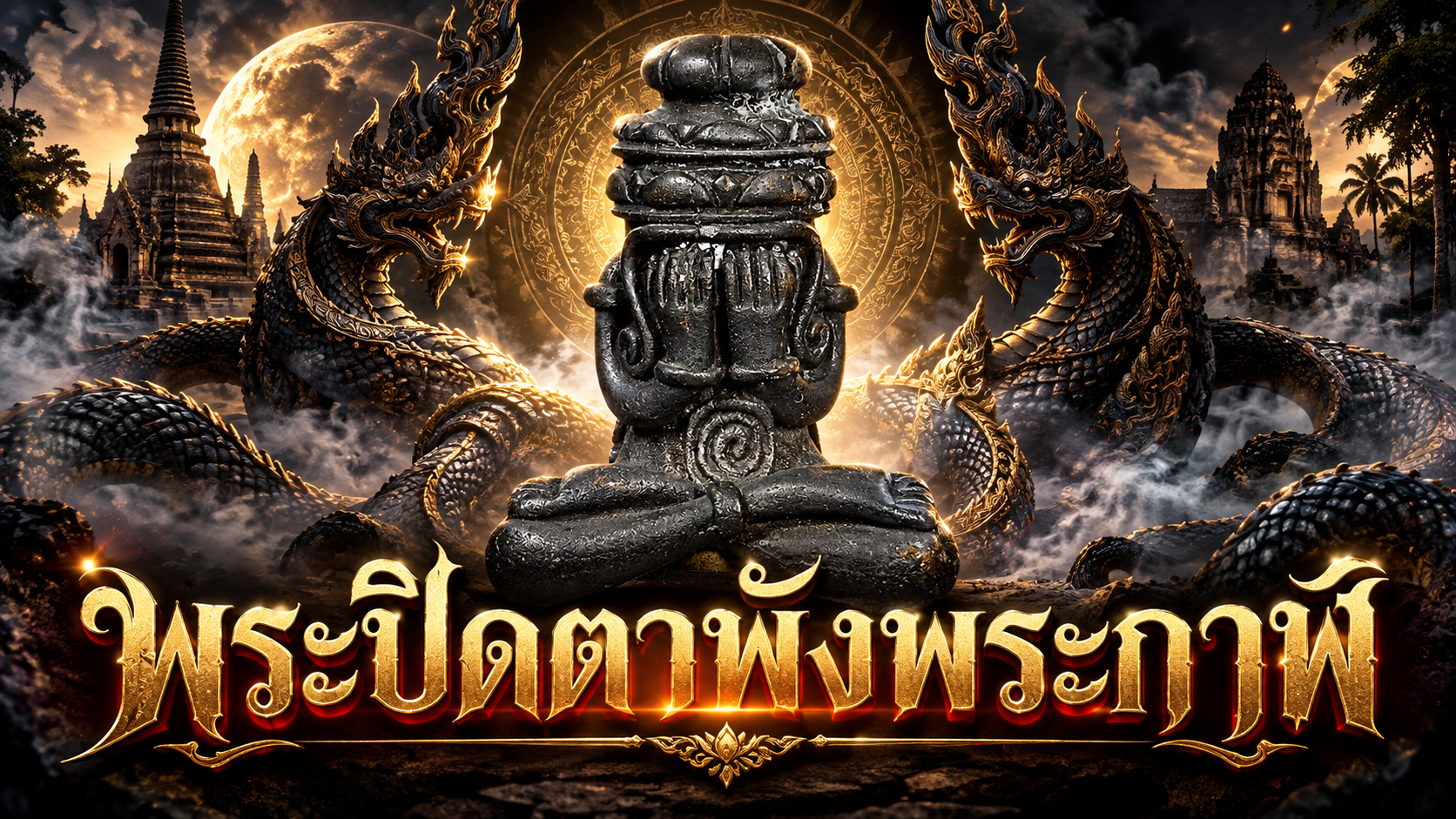
พระปิดตาพังพระกาฬมักได้รับการสร้างขึ้นในลักษณะองค์เทพหรือองค์พระประทับนั่งขัดสมาธิ พระหัตถ์ยกขึ้นปิดพระพักตร์ อันเป็นรูปแบบที่เชื่อมโยงกับคติ “พระปิดตา” ซึ่งพบอยู่ในวัฒนธรรมการสร้างพระเครื่องไทยมาอย่างยาวนาน การ “ปิดตา” ในเชิงสัญลักษณ์มิได้หมายถึงการหลีกหนีจากโลกภายนอก แต่สามารถตีความได้ว่าเป็นการ ปิดประตูแห่งสิ่งรบกวนจากภายนอก แล้วหันกลับเข้าสู่พลังภายใน เป็นภาวะแห่งสมาธิ ความสงบ และการไม่ยอมให้อำนาจของความกลัว ความโลภ ความโกรธ หรือสิ่งไม่เป็นมงคลเข้ามาครอบงำจิตใจ ในพระปิดตาพังพระกาฬบางรูปแบบ ยังปรากฏ พญานาคหรืองูขนาดใหญ่เลื้อยพันรอบองค์ ซึ่งยิ่งทำให้รูปลักษณ์มีเอกลักษณ์เฉพาะตัว ในคติของเอเชียอาคเนย์ นาคสัมพันธ์กับน้ำ ความอุดมสมบูรณ์ พลังใต้พิภพ การพิทักษ์รักษา และอำนาจลี้ลับ ดังนั้นภาพของนาคที่ล้อมรอบองค์พังพระกาฬจึงสามารถมองได้ในฐานะสัญลักษณ์ของ พลังที่คุ้มครองศูนย์กลางแห่งสมาธิและอำนาจ ขณะเดียวกันก็สร้างบุคลิกขององค์พังพระกาฬให้มีความเข้มแข็ง ดุดัน และเปี่ยมด้วยพลังในการป้องกันภยันตราย
ความหมายของนาม “พังพระกาฬ”
ในวงการความเชื่อมักมีการอธิบายนาม “พังพระกาฬ” ในความหมายเชิงสัญลักษณ์ว่าเป็นพลังที่สามารถ ทำลายอุปสรรค สิ่งอัปมงคล และความมืดที่ขวางกั้นชีวิต คำว่า “พัง” ทำให้เกิดภาพของการทำลายสิ่งกีดขวาง ขณะที่คำว่า “กาฬ” ในภาษาและวัฒนธรรมดั้งเดิมสามารถเชื่อมโยงกับความมืด เวลา ความตาย ภัย หรืออำนาจที่น่าเกรงขาม เมื่อนำมารวมกันในบริบทของความเชื่อสมัยใหม่ “พังพระกาฬ” จึงมักถูกตีความว่าเป็น อำนาจที่เข้าทำลายความมืดและสิ่งไม่เป็นมงคล เพื่อเปิดทางให้ชีวิตสามารถก้าวต่อไปได้ อย่างไรก็ตาม การอธิบายดังกล่าวควรเข้าใจว่าเป็น การตีความทางคติและความศรัทธา มากกว่าจะเป็นการแปลศัพท์ทางภาษาศาสตร์หรือหลักฐานทางประวัติศาสตร์โดยตรง
จากการ “ป้องกัน” สู่การ “เปิดทาง”
หนึ่งในเหตุผลที่พระปิดตาพังพระกาฬได้รับความนิยม คือคุณลักษณะที่ผู้ศรัทธามักเชื่อมโยงกับการ ขจัดสิ่งติดขัดและเปิดหนทางใหม่ ตามคติความเชื่อ ผู้บูชามักอธิษฐานถึงเรื่องการป้องกันภัย การเอาชนะอุปสรรค การคลี่คลายปัญหา การเดินทาง การทำงาน การประกอบธุรกิจ หรือการผ่านช่วงเวลาที่ยากลำบากในชีวิต ดังนั้น แก่นสำคัญของพังพระกาฬจึงไม่จำเป็นต้องถูกมองเพียงในความหมายของ “การทำลาย” แต่สามารถมองในอีกด้านหนึ่งว่าเป็น การทำลายสิ่งเก่าเพื่อเปิดพื้นที่ให้สิ่งใหม่เกิดขึ้น
ทำลายความกลัว เพื่อให้เกิดความกล้า
ทำลายความลังเล เพื่อให้เกิดการตัดสินใจ
ทำลายอุปสรรค เพื่อให้เกิดหนทาง
และทำลายความมืด เพื่อให้มองเห็นแสงสว่างอีกครั้ง
ความหมายเช่นนี้ทำให้พังพระกาฬสามารถถูกตีความได้ทั้งในมิติแห่งความศรัทธาและในเชิงปรัชญาชีวิต
“พังพระกาฬ” กับ “ขุนพลพังพะการ” ไม่ควรรีบสรุปว่าเป็นบุคคลเดียวกัน
เรื่องหนึ่งที่มักเกิดความสับสน คือการนำ พระปิดตาพังพระกาฬ ไปเชื่อมโยงกับบุคคลหรือชื่อที่ปรากฏในตำนานท้องถิ่น เช่น “ขุนพลพังพะการ” ในบางเรื่องเล่าของนครศรีธรรมราช ชื่อดังกล่าวอาจถูกกล่าวถึงในฐานะบุคคลหรือขุนศึกในอดีต ขณะที่ “พังพระกาฬ” ในวัฒนธรรมวัตถุมงคลร่วมสมัยกลับถูกยกระดับขึ้นเป็นอำนาจศักดิ์สิทธิ์หรือพระโพธิสัตว์ในจักรวาลความเชื่อของจตุคามรามเทพ จึงควรแยกให้ชัดระหว่าง ประวัติศาสตร์ ตำนานท้องถิ่น และคติการสร้างวัตถุมงคลในยุคหลัง เพราะทั้งสามส่วนอาจมีการหยิบยืมชื่อ บุคลิก และเรื่องเล่ามาผสมผสานกันจนเกิดความหมายใหม่ตามยุคสมัย การแยกชั้นของเรื่องเล่าเช่นนี้ไม่ได้ลดทอนคุณค่าของความศรัทธา ตรงกันข้าม กลับช่วยให้เราเข้าใจพัฒนาการของความเชื่อได้ลึกซึ้งยิ่งขึ้น
พังพระกาฬในจักรวาลความเชื่อของจตุคามรามเทพ
เมื่อมองในภาพรวม พังพระกาฬมีบุคลิกแตกต่างจากภาพของจตุคามรามเทพในมิติแห่งพระบารมีอย่างน่าสนใจ หากจตุคามรามเทพสะท้อนถึง พระบารมี การปกครอง ความรุ่งเรือง และอำนาจแห่งเทวราชา พังพระกาฬก็เปรียบเสมือนอีกด้านหนึ่งของพลังนั้น คือพลังที่พร้อมเผชิญหน้า ปกป้อง และทำลายสิ่งที่เป็นภัย ในเชิงสัญลักษณ์จึงอาจกล่าวได้ว่า
จตุคามรามเทพ คือพลังแห่งการสร้างและการปกครอง
ขณะที่พังพระกาฬ คือพลังแห่งการปกป้องและการขจัดสิ่งกีดขวาง
ทั้งสองแนวคิดจึงสามารถดำรงอยู่ร่วมกันในจักรวาลความเชื่อเดียวกันได้ โดยด้านหนึ่งคือการสร้างความรุ่งเรือง ส่วนอีกด้านคือการกำจัดสิ่งที่ขัดขวางความรุ่งเรืองนั้น
ความศรัทธาที่ต้องเดินคู่กับการกระทำ
แม้พระปิดตาพังพระกาฬจะได้รับการกล่าวถึงในด้านพุทธคุณและอำนาจศักดิ์สิทธิ์ แต่หากมองให้ลึกกว่าวัตถุมงคล ความหมายที่ทรงพลังที่สุดอาจอยู่ที่สิ่งซึ่งองค์พังพระกาฬเตือนใจผู้บูชา เพราะอุปสรรคจำนวนไม่น้อยในชีวิตไม่ได้อยู่ภายนอกตัวเรา
บางครั้งสิ่งที่ต้อง “พัง” อาจเป็นความกลัวในใจ
บางครั้งคือความลังเล
บางครั้งคือความเคยชิน
บางครั้งคือความคิดที่ฉุดรั้งเราไว้กับอดีต
พระปิดตาจึงอาจเป็นเครื่องเตือนให้สงบจิต มองกลับเข้ามาภายใน และตัดเสียงรบกวนจากภายนอกออกเสียก่อน ส่วน “พังพระกาฬ” คือการเตือนว่า เมื่อรู้แล้วว่าอะไรคืออุปสรรค ก็ต้องมีความกล้าที่จะ ลงมือทำลายสิ่งกีดขวางนั้นด้วยการกระทำของตนเอง เพราะศรัทธาอาจสร้างกำลังใจ แต่การตัดสินใจและการลงมือทำ คือสิ่งที่จะเปลี่ยนเส้นทางชีวิตจริง
พังความมืด เปิดหนทางใหม่
ท้ายที่สุดแล้ว ไม่ว่าจะมองพระปิดตาพังพระกาฬในฐานะวัตถุมงคล ภาคแห่งจตุคามรามเทพ อำนาจคู่บารมี หรือสัญลักษณ์ทางจิตวิญญาณ แก่นกลางของความเชื่อยังคงวนกลับมายังแนวคิดเดียวกัน คือ
การไม่ยอมจำนนต่อความมืดและอุปสรรค
พระหัตถ์ที่ปิดพระพักตร์ คือการหันกลับมาควบคุมจิตของตนเอง
นาคที่โอบล้อม คือพลังแห่งการพิทักษ์
และนาม “พังพระกาฬ” คือสัญลักษณ์แห่งการทำลายสิ่งที่ขวางทาง
เพื่อให้หลังจากความมืดผ่านพ้นไป
มนุษย์ยังสามารถมองเห็นหนทาง
ลุกขึ้นอีกครั้ง
และเดินต่อไปด้วยสติ ความกล้า และศรัทธา
“ปิดตา มิใช่เพื่อหนีโลก
แต่เพื่อสงบจิตให้มองเห็นสิ่งที่แท้จริง
พังพระกาฬ มิใช่เพียงการทำลาย
แต่คือการทำลายอุปสรรค เพื่อเปิดทางให้ชีวิตก้าวต่อไป”
Phra Pidta Phang Phra Kan
The Power to Break Through Darkness and Obstacles
Within the spiritual tradition surrounding Jatukam Ramathep, one sacred figure has long captured the imagination and devotion of believers: Phang Phra Kan, often represented in the form known as Phra Pidta Phang Phra Kan. In traditions associated with Jatukam Ramathep, Phang Phra Kan is interpreted in several ways depending on the lineage of belief. Some traditions regard him as an emanation or manifestation of the Bodhisattva-Devaraja Jatukam Ramathep, while others describe him as a powerful guardian, warrior, or trusted protector serving alongside the divine sovereign.
For this reason, Phang Phra Kan represents more than a sacred amulet. He embodies the idea of protection, confrontation with adversity, the destruction of negative forces, and the opening of a new path when obstacles stand in the way.
The Sacred Form of Phra Pidta
Phra Pidta Phang Phra Kan is commonly depicted seated in a meditative posture, with both hands raised to cover the face or eyes. This visual form connects it with the wider Thai tradition of Phra Pidta, literally meaning “the Buddha or sacred figure who closes the eyes.” Yet the act of covering the eyes does not necessarily signify withdrawal from the world. Symbolically, it may be understood as closing the doors to external distractions in order to awaken the power within. It represents stillness, concentration, restraint, and the ability to prevent fear, anger, greed, confusion, or harmful influences from disturbing the mind. In some representations of Phra Pidta Phang Phra Kan, a Naga or great serpent coils around the sacred figure, creating one of the most recognizable characteristics of the image. Throughout many Southeast Asian traditions, the Naga is associated with water, fertility, hidden power, the underworld, guardianship, and sacred protection. The serpent surrounding Phang Phra Kan can therefore be interpreted as a symbol of protective power encircling a concentrated spiritual force. Together, the meditative posture and the guardian serpent create an image that is simultaneously calm and formidable — still at its center, yet powerful enough to confront danger.
The Meaning Behind the Name “Phang Phra Kan”
Within contemporary spiritual belief, the name “Phang Phra Kan” is often given a symbolic interpretation connected with the destruction of darkness and obstacles. The Thai word “Phang” evokes the idea of breaking, demolishing, or destroying something that stands in the way. The term “Kan” or “Kala” may carry associations in traditional language and mythology with darkness, time, death, danger, or formidable supernatural power. Within modern devotional interpretation, the name has therefore come to symbolize a sacred power capable of breaking through darkness, misfortune, harmful influences, and obstacles. It is important, however, to distinguish symbolic religious interpretation from strict linguistic or historical etymology. The popular meaning of “the one who destroys darkness and obstacles” belongs primarily to the evolving world of faith, sacred symbolism, and modern amulet culture.
From Protection to Opening the Way
One reason Phra Pidta Phang Phra Kan has remained compelling to believers is the idea that his power is not limited to protection. He is also associated with breaking through blocked paths. According to devotional belief, worshippers may invoke Phang Phra Kan when facing danger, conflict, difficult circumstances, business problems, major life transitions, or situations in which progress appears impossible. Seen from this perspective, his central symbolism is not merely about destruction. It is about destroying what must be removed so that something new can emerge.
Destroy fear, so courage may arise.
Destroy hesitation, so decisions can be made.
Destroy obstacles, so a path may appear.
Destroy darkness, so light can once again be seen.
This gives the figure of Phang Phra Kan meaning beyond the world of sacred objects. He can also be understood as a powerful metaphor for transformation.
Phang Phra Kan and “Khun Phon Phang Pha Kan”
A point of frequent confusion concerns the relationship between Phra Pidta Phang Phra Kan and historical or legendary figures sometimes referred to in local narratives by names such as Khun Phon Phang Pha Kan. Some traditions of Nakhon Si Thammarat contain stories of commanders, warriors, or historical personalities whose names resemble that of Phang Phra Kan. However, these narratives should not automatically be treated as referring to the same figure. In modern sacred-object traditions, Phang Phra Kan is generally presented as a spiritual or Bodhisattva-like power within the wider cosmology surrounding Jatukam Ramathep.
Local history, oral legend, and modern amulet traditions often influence one another. Names, personalities, symbols, and narratives may gradually merge over time, creating new interpretations for later generations. Recognizing these different layers does not diminish the spiritual value of the tradition. On the contrary, it allows us to appreciate how sacred belief evolves through the interaction of history, mythology, local memory, art, and devotion.
Phang Phra Kan Within the World of Jatukam Ramathep
Viewed within the wider spiritual universe of Jatukam Ramathep, Phang Phra Kan possesses a distinctive character. If Jatukam Ramathep represents royal authority, prosperity, divine sovereignty, protection, and the power to establish order, Phang Phra Kan may be understood as another dimension of that sacred power — the force that confronts danger and removes whatever threatens that order. Symbolically, one might say:
Chatukarm Ramathep represents the power to create, govern, and bring prosperity.
Phang Phra Kan represents the power to protect, confront, and remove obstacles.
The two concepts therefore complement one another. One creates the path toward prosperity. The other clears away the forces that obstruct that path.
Faith Must Walk Together With Action
Although Phra Pidta Phang Phra Kan is widely associated with sacred protection and supernatural power in devotional traditions, perhaps his most enduring meaning can be found beyond the amulet itself. Not every obstacle in life comes from the outside.
Sometimes what must be “broken” is fear.
Sometimes it is hesitation.
Sometimes it is an old habit.
Sometimes it is a belief that keeps us trapped in the past.
The image of Phra Pidta, with his hands covering his eyes, can therefore serve as a reminder to silence the noise of the outside world and return attention to the mind within.
Phang Phra Kan, meanwhile, represents what comes next. Once we clearly recognize the obstacle, we must have the courage to confront and remove it. Faith can give us strength. Sacred objects can remind us of our purpose. But ultimately, decision and action are what transform the direction of a human life.
Breaking the Darkness, Opening a New Path
Whether Phra Pidta Phang Phra Kan is understood as a sacred amulet, an emanation associated with Jatukam Ramathep, a powerful guardian, or a spiritual symbol, the central meaning returns to the same fundamental idea: Do not surrender to darkness or adversity.
The hands covering the eyes symbolize the discipline to turn inward and master the mind. The serpent surrounding the sacred figure symbolizes protection and hidden power. And the name Phang Phra Kan has come to represent the force that breaks through whatever blocks the path ahead. So that when darkness has passed, a path may once again become visible, one may rise again, and continue forward with mindfulness, courage, and faith.
**“The eyes are closed not to escape the world,
but to quiet the mind and see what is truly within.
Phang Phra Kan does not symbolize destruction alone,
but the destruction of obstacles
so that a new path may begin.”**